The presence of sophisticated market participants is not a substitute for your own risk assessment.
The same market can involve different objectives
An institution and an individual may encounter the same crypto asset while making very different decisions. Their time horizons, resources, obligations and ability to absorb losses can differ. An institution may also be providing a service rather than making a long-term directional investment.
It is therefore unsafe to read a headline about institutional involvement as a personal recommendation. Nor should institutions be assumed to have guaranteed profits or individuals to be inevitably unsuccessful. What matters is the actual exposure, its risks and the investor's circumstances.
The core risks remain
Crypto assets can move sharply in value and investors can lose some or all of their money. Risks include fraud, platform failure, cybersecurity problems and the loss or theft of private keys. Regulatory status does not turn a volatile asset into a low-risk investment. [2]
How an asset is held matters. Direct ownership with personal control of keys creates different responsibilities from holding an interest through a platform or buying an investment fund. A familiar app interface does not explain who controls the assets or what happens if access is interrupted. [1, 2]
Verify the platform, not just the brand
Canadians considering crypto trading should verify the platform's registration with Canadian securities regulators and review the permitted activities and conditions. Use independently located regulator information. Registration is an investor-protection safeguard, not an endorsement of the investment or a guarantee against loss. [1, 2]
Be alert to cloned websites, unsolicited messages and AI-generated endorsements. A scam can imitate a registered business or a trusted person. Do not give someone wallet credentials or send assets merely because the communication appears professional. [3]
Understand what protection does not mean
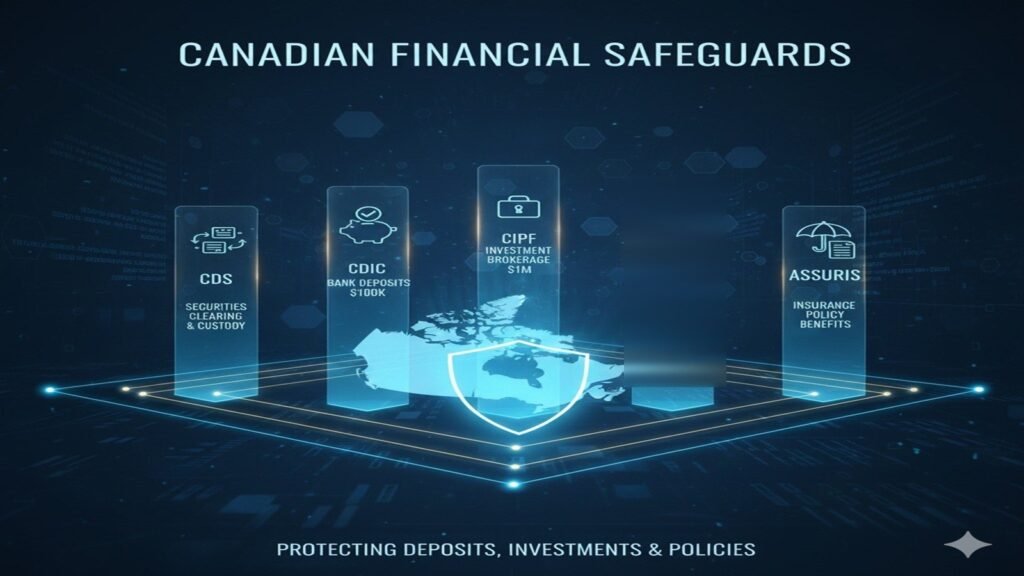
CDIC does not insure cryptocurrencies, including stablecoins. CIPF excludes crypto assets held by a member firm and does not compensate ordinary investment losses. Do not assume that a platform's registration, an account label or the involvement of a custodian creates deposit insurance or a guaranteed asset value. [4, 5]
A regulated investment fund is a different legal structure from direct crypto holdings, but buying a crypto fund still exposes the investor to material crypto-related risk. Read the fund documents and verify the applicable custody and account arrangements rather than assuming all structures are equivalent. [2]
Build the foundation before speculating
Before committing money, consider essential expenses, debt commitments, accessible reserves and the effect of a total loss on important goals. Avoid making an allocation solely because a large institution has entered the market or a price has recently risen.
If you cannot explain the asset, custody arrangements, exit process, fees and loss exposure, pause. Institutional participation may be relevant market context. It does not do the work of personal due diligence.
Important information and disclaimer
General education only; not an offer, recommendation or endorsement of any crypto asset, fund or platform. Crypto is speculative and may result in total loss. Registration and institutional participation do not guarantee safety, liquidity or returns. No crypto dealing or advisory service is represented by this article. This article is for general information for a Canadian audience and is not individualized insurance, investment, tax, legal or accounting advice. It is not an offer or solicitation. Suitability depends on personal circumstances, affordability and objectives. Contracts, enacted legislation and applicable provincial rules prevail over summaries. Examples are illustrative; non-guaranteed values are not promises. Information was checked against the sources available on November 22, 2026 and may change. Consult appropriately licensed or qualified professionals before acting.
Sources
- Ontario Securities Commission investor education: Crypto trading platforms
- Ontario Securities Commission investor education: Risks of crypto assets
- Ontario Securities Commission investor education: Red flags of crypto fraud
- CDIC: What is covered
- Canadian Investor Protection Fund: About CIPF coverage
Sources reviewed November 22, 2026.