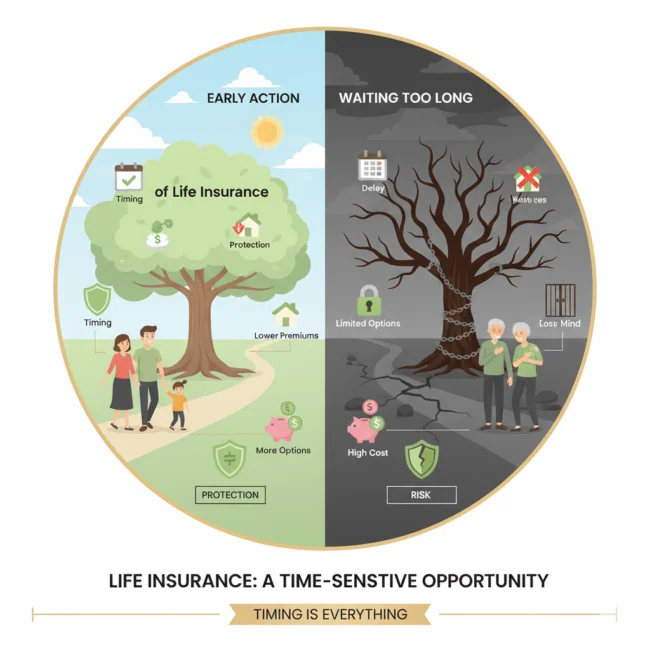
Many people assume they can buy life insurance whenever they decide they need it. In practice, coverage depends on underwriting, and the options available today may not be available later.
Coverage is offered, not promised
Before issuing a policy, an insurer assesses risk through underwriting. The answers you give, and sometimes medical information or tests, help the insurer decide whether to offer coverage, how much and at what premium. FCAC notes that insurers generally ask about health, lifestyle and family medical history when you apply. [1]
Factors that commonly affect the decision
- Age. Premiums generally rise with age, and some products have maximum issue ages.
- Health history. Current and past conditions can affect eligibility or pricing, even when they are well managed.
- Lifestyle. Tobacco or nicotine use, including vaping, alcohol use and some occupations or hobbies can change the assessment.
- Family history. Certain hereditary conditions may be considered.
Because these factors differ from person to person, two applicants can receive different offers for the same amount of coverage, and some applications are postponed or declined.
Why waiting can be costly
Postponing a decision is understandable, but health and circumstances can change without warning. A new diagnosis or a change in lifestyle can lead to higher premiums, exclusions or fewer product choices. The time to review coverage is usually when you are healthy and can compare options calmly, not after an event has already changed your situation.
Answer every question accurately
Full and honest disclosure matters. Misstatements on an application can affect a claim later, particularly during the contestability period. If you are unsure how to answer a question, ask before you sign rather than guessing. [1]
Planning, not fear
Reviewing life insurance is not about expecting the worst. It is a practical step that can help protect the people who depend on you. Start with the need: income replacement, debts, dependants and final expenses. Then compare term and permanent options against what your household can sustain. Securing appropriate coverage while you qualify can mean more choice and more predictable costs.
The bottom line
Life insurance is approved, not guaranteed. If you are unsure where you stand, a review of your needs and current health can show what options are realistically available today.
Important information and disclaimer
Underwriting rules, eligibility and pricing vary by insurer and product. No coverage outcome or premium is promised. This article is for general information for a Canadian audience and is not individualized insurance, investment, tax, legal or accounting advice. It is not an offer or solicitation. Suitability depends on personal circumstances, affordability and objectives. Contracts, enacted legislation and applicable provincial rules prevail over summaries. Examples are illustrative. Information was checked against the sources available on November 22, 2026 and may change. Consult appropriately licensed or qualified professionals before acting.
Sources
- Financial Consumer Agency of Canada: Life insurance
Sources reviewed November 22, 2026.