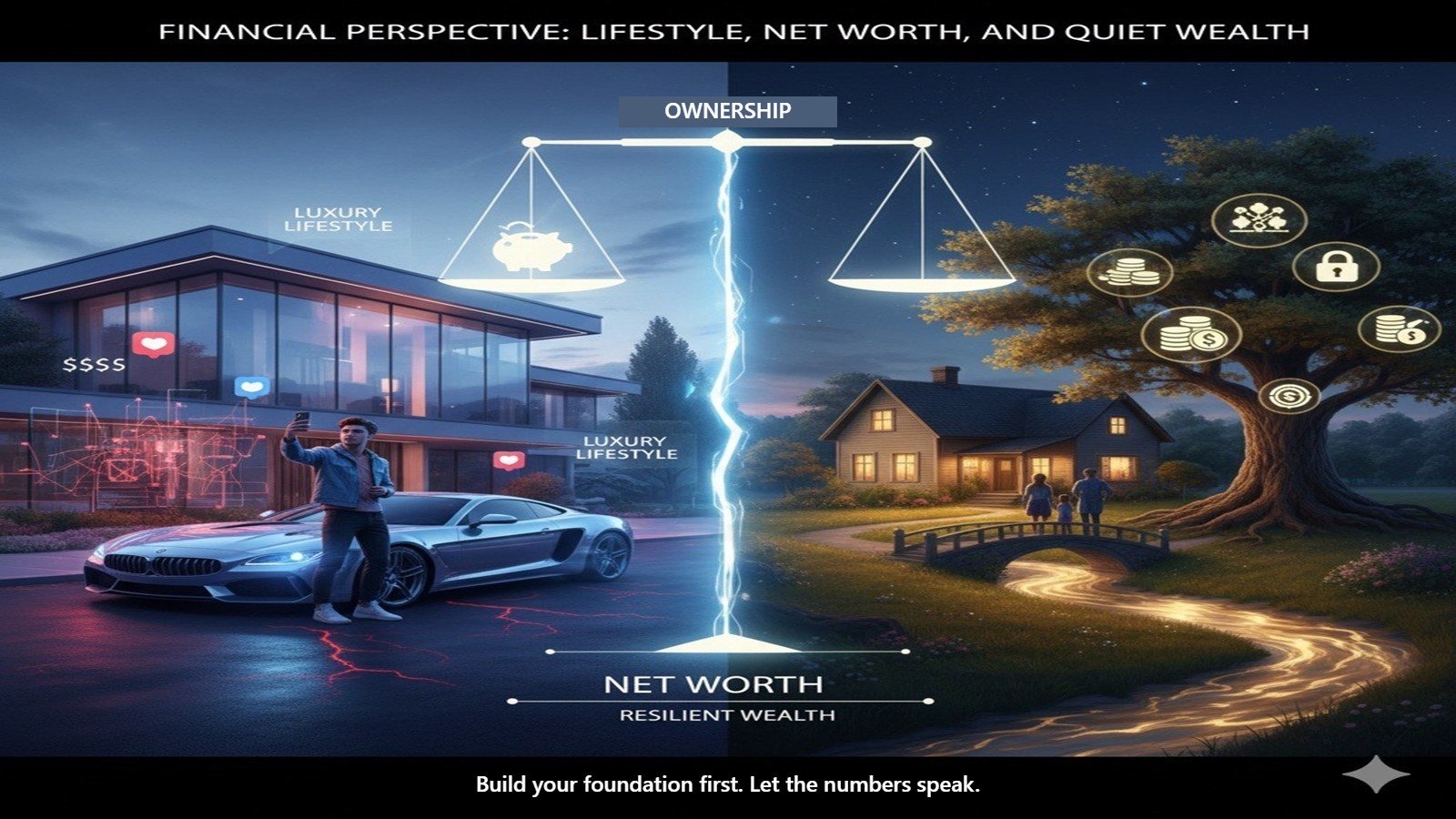
Visible spending tells only part of a financial story. Resilience depends on what remains behind the lifestyle.
Appearance is not a balance sheet
A beautiful home or an expensive vehicle can reflect enjoyment, business use, debt financing, accumulated savings or a combination of these. A photograph does not reveal ownership costs, liabilities or available cash. Equally, modest spending does not prove that someone is wealthy.
A useful personal measure is net worth: the value of what you own less what you owe. Use realistic values and the same valuation date. Treat this as an organizing tool, not a competition with neighbours or social-media accounts. A household's responsibilities and priorities matter more than the appearance of success.
Separate net worth from accessible money
A household can have valuable property and still struggle with an unexpected bill. Review liquidity separately from total assets: what can be accessed when needed, at what cost and with what consequences? Borrowing capacity is not the same thing as cash already available.
Insurance cash value should not be counted as though it were an unrestricted savings account. Access depends on the contract. Borrowing against a policy can reduce amounts available to beneficiaries or on cancellation, and universal-life account values may fluctuate with the selected investments. [1]
Make room for both enjoyment and resilience
Quiet wealth does not require rejecting every luxury. It means making spending choices with a clear picture of commitments. Consider essential expenses, debt payments, short-term needs, long-term goals and the cost of protection before increasing fixed lifestyle costs.
For couples, an agreed definition of financial security is useful. One person may value travel while another values paying down debt. A shared review can turn those preferences into an intentional budget rather than a series of competing purchases.
Protection is one part of the foundation
Life insurance can help dependants manage the financial impact of a death by replacing income or paying debts. Term and permanent insurance have different structures and costs; neither should be treated as a status symbol or a universal wealth-building requirement. [1]
Before adding a product, identify the problem it solves and compare alternatives. An attractive projected value does not remove the need to understand fees, guarantees, access restrictions or affordability. Keep enough flexibility for changes in work, family circumstances and priorities.
Build a repeatable review
At least periodically, list assets and debts, check accessible reserves, review major recurring costs and revisit goals. Track progress against your own earlier position rather than someone else's public image. Keep valuations consistent so apparent progress is not simply a change in assumptions.
Financial confidence is less about proving what you can buy and more about understanding the choices you can sustain. The strongest foundation is one you can explain clearly: what you own, what you owe, what you are protecting and why.
Important information and disclaimer
This article offers general educational perspectives, not individualized budgeting, investment, tax or insurance advice. Net-worth figures do not establish liquidity or future financial security. No lifestyle, asset class or insurance product guarantees wealth. This article is for general information for a Canadian audience and is not individualized insurance, investment, tax, legal or accounting advice. It is not an offer or solicitation. Suitability depends on personal circumstances, affordability and objectives. Contracts, enacted legislation and applicable provincial rules prevail over summaries. Examples are illustrative; non-guaranteed values are not promises. Information was checked against the sources available on November 22, 2026 and may change. Consult appropriately licensed or qualified professionals before acting.
Sources
- Financial Consumer Agency of Canada: Life insurance
Sources reviewed November 22, 2026.